



VP Racing Fuels Official Fuel of Factory Connection Racing
San Antonio, TX (January 28, 2020) VP Racing Fuels, Inc., a leader in performance fuels, lubricants, and additives, has just...
Get FREE shipping on all non-hazmat orders of $125 +
Get FREE shipping on all non-hazmat orders of $125 +
Engines don’t ask for much: clean fuel, reliable ignition, and the right oil. But when it comes to small engines and high-performance machines, oil choice becomes a critical factor in how long they last and how well they run. 4 cycle engine oil isn’t just a fluid that keeps things moving; it’s a layer of protection that shields components from wear, heat, and buildup. Whether it’s a lawnmower, generator, or race kart, using the correct oil helps the engine stay cleaner, run cooler, and perform at its peak.
4 cycle engine oil is specifically made for engines that run on the four-stroke combustion cycle, a setup common in lawnmowers, generators, motorcycles, and small utility engines. These engines rely on oil to circulate internally and reduce wear on moving parts. Here's what sets it apart:
Unlike 2-stroke engines that burn oil with fuel, a four-stroke system uses oil as a dedicated lubricant. That means 4 cycle engine oil must deliver stable protection over time, handling both heat and mechanical stress without breaking down. It protects crankshafts, cams, bearings, and other components from long-term wear.
The formula used in 4 cycle engine oil is tailored for continuous lubrication. It includes additives like detergents, anti-foam agents, and corrosion inhibitors, all critical for small engine health. Since the oil is not consumed during combustion, it must maintain its integrity through repeated use.
Air-cooled engines generate high operating temperatures in compact spaces. That’s why oil for 4 cycle engine systems must be resistant to breakdown, oxidation, and sludge formation. Choosing the right oil for 4 cycle engine performance ensures your equipment can handle load changes, temperature spikes, and extended run times.
Understanding how a 4-stroke engine operates makes it easier to see why oil type matters. These engines complete a precise combustion sequence in four distinct stages, and each relies on proper lubrication to maintain power and durability. Here's how each stroke works:
During the intake stroke, the piston moves downward to allow a mixture of air and fuel into the cylinder. This mixture sets the foundation for combustion.
The piston then rises, compressing the mixture tightly. Maintaining a consistent seal during this stage is critical, and high-quality 4 cycle engine oil helps reduce friction while supporting internal pressure.
Once compressed, the air-fuel mixture is ignited by the spark plug. The resulting explosion forces the piston downward with maximum energy. This is the moment when oil for 4 cycle engine systems is pushed to its limits, requiring thermal stability and consistent viscosity under pressure.
In the final stroke, the piston pushes upward again, expelling burned gases from the cylinder. Deposits and carbon buildup are minimized when 4 cycle engine oil and fuel quality work together. Components like camshafts and lifters are especially vulnerable during cold starts, which is where products like Engine Assembly Lube provide critical support without replacing the need for oil for 4 cycle engine applications.
Using the wrong oil in a 4-stroke engine is more than just a compatibility issue. It can lead to performance loss, carbon buildup, and long-term engine damage. Here's why 2 cycle oil should never be substituted in place of proper 4 cycle engine oil:
2 cycle oil is designed to burn with fuel, leaving behind residues that a 4-stroke engine isn’t built to handle. When used in a 4-stroke system, that residue clogs valves, fouls plugs, and restricts airflow, all of which reduce efficiency and increase wear. This makes it impossible for even the best 4 cycle engine oil to undo the buildup once it starts.
4 cycle engines rely on pressurized lubrication to keep internal components like crankshafts, camshafts, and bearings in motion. 2 cycle oil lacks the detergent levels, film strength, and additives required to do that job. Without proper lubrication from oil for 4 cycle engine applications, heat and friction build up rapidly, leading to premature part failure.
Symptoms like hard starts, smoking, or loss of power are common signs that the wrong oil has been used. In many cases, 2 stroke oil causes spark plug fouling or combustion chamber deposits, which is exactly why things like Honda Lawn Mower issues can be traced back to incorrect lubrication.
Choosing the right oil isn’t just about matching viscosity or grabbing the nearest bottle off the shelf. It requires a closer look at formulation, application, and how the oil performs under pressure. Here's what to focus on when selecting the best 4 cycle engine oil:
Start with your engine manufacturer's viscosity recommendation. Whether it’s SAE 10W-30, 15W-40, or something more specific, the viscosity of the best 4 cycle engine oil must provide protection during both cold starts and high-heat operation. Inconsistent viscosity leads to dry starts and breakdown under load.
Additives play a crucial role in long-term engine health. The best 4 cycle engine oil includes detergents to keep internal parts clean, anti-wear agents to protect surfaces under load, and oxidation inhibitors that resist thermal breakdown. These elements keep oil for 4 cycle engine systems stable over extended use.
A lawnmower used once a week and a race kart hitting the track every weekend have different lubrication demands. That’s why finding oil for 4 cycle engine applications isn’t one-size-fits-all. Whether you're working, racing, or restoring, the oil needs to match the temperature ranges and load cycles of the engine in question.
Not every engine runs under the same conditions, which means not every oil will meet the same demands. Matching the oil type to how the engine is used is critical for protecting internal components and maximizing output. Here's how to choose the right oil for 4 cycle engine applications:
Engines used for high-load tasks like generators or race karts demand oil for 4 cycle engine protection that won’t thin out under heat. Equipment like lawnmowers may not face the same extremes, but they still benefit from the best 4 cycle engine oil when it comes to moisture resistance and seasonal durability.
Each engine’s design affects how oil flows and protects. Larger engines often run better with higher-viscosity formulas, while compact models might require a thinner blend. Using the wrong viscosity leads to overheating, friction, or even oil starvation, issues that even the best 4 cycle engine oil can’t solve without proper fit.
Outdoor tools, motorsports engines, and standby generators all need oil formulated for their environment. Detergent content, oxidation stability, and additive strength must align with how the engine is actually being used. Many users pair premium oil for 4 cycle engine performance with upgrades from our Best Gas for Lawnmowers collection to reduce deposits and keep fuel systems clean.
Despite how often it’s used, 4 cycle engine oil is surrounded by misinformation. From misunderstood labels to generic product claims, many assumptions can lead to poor maintenance decisions. Here are the most common myths and the truth behind them:
Many assume that oil is interchangeable across engine types, but that’s false. The best 4 cycle engine oil is formulated specifically for engines that rely on pressure-fed lubrication systems. Using a product not intended for this setup can result in early wear, deposits, and inconsistent film strength under heat.
Some products claim to enhance performance with “extra additives,” but not all are beneficial. When oil for 4 cycle engine systems already contains detergents, dispersants, and anti-wear agents, adding more can upset the balance. In some cases, additives reduce the oil’s ability to function as designed.
There’s a belief that thicker oil coats parts more effectively, but this isn’t always true. The best 4 cycle engine oil offers flow and protection at both cold starts and high operating temperatures. If oil is too thick, it may not circulate fast enough at startup, especially in smaller engines.
Skipping oil changes or running past service intervals is one of the fastest ways to degrade engine performance. Even high-quality oil for 4 cycle engine applications loses effectiveness over time as it collects contaminants and breaks down under heat cycles.
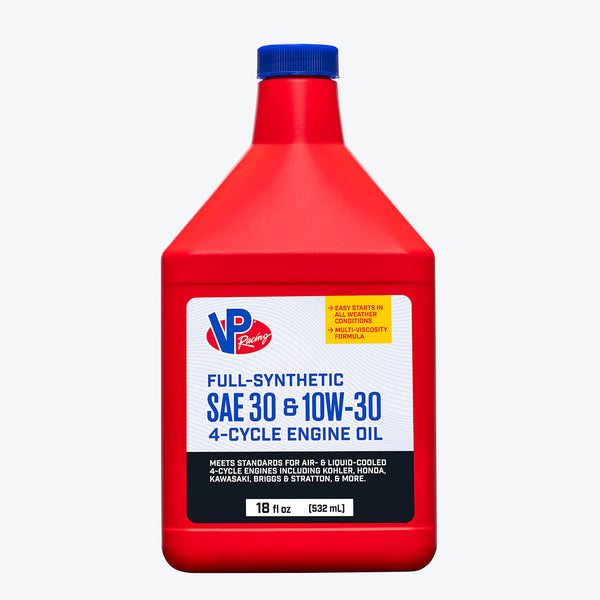
When it comes to protecting your engine and maximizing performance, not all oils meet the mark. VP Racing offers purpose-driven solutions that support both everyday equipment and high-stress motorsport environments. If you're looking for durability, temperature stability, and protection where it matters most, start with oil built to do more than just lubricate.
VP’s premium 4 cycle engine oil lineup includes blends designed to perform under pressure without sacrificing reliability. Whether you're searching for the best 4 cycle engine oil for a residential lawnmower or need oil for 4 cycle engine demands at the track, VP's product range is made for engines that work hard and run hot.
The right oil doesn’t just extend the life of your equipment; it improves consistency, reduces wear, and helps deliver power exactly when you need it. Shop VP Racing to find oil for 4 cycle engine performance that holds up in real conditions, not just controlled lab tests. If the job involves horsepower, heat, or high output, this is where you start.
It’s not recommended. While they are chemically compatible, mixing them can dilute the benefits of synthetic oil, such as higher temperature stability and cleaner operation.
Yes. Most unopened oils remain stable for up to five years when stored in a cool, dry place. After that, additives can degrade and reduce performance.
Not always. Automotive oils often contain friction modifiers that can damage small engine components like wet clutches or reduce performance in splash-lubricated systems.
Yes, as long as the oil is rated for small engines or outdoor power equipment. Look for high-heat tolerance and resistance to oxidation.
At least once per season, even if the engine hasn’t been used much. Oil absorbs moisture and contaminants over time, even when idle.
Overfilling can cause foaming, overheating, and seal damage. It also increases crankshaft resistance, which can lower performance or trigger failure.


