



VP Racing Fuels Official Fuel of Factory Connection Racing
San Antonio, TX (January 28, 2020) VP Racing Fuels, Inc., a leader in performance fuels, lubricants, and additives, has just...
Get FREE shipping on all non-hazmat orders of $125 +
Get FREE shipping on all non-hazmat orders of $125 +
Generators run hard when it counts. No matter if you're keeping tools running on a job site, supporting a race trailer, or powering essential equipment during an outage, the engine inside your generator is under constant load. Generator oil isn’t just there to keep parts moving; it helps manage heat, reduces friction, and keeps internal components protected through long runtime cycles. Choosing the right oil for generator performance is one of the most important investments you can make in avoiding downtime and extending equipment life.
Generator oil plays a critical role in how well small engines perform under sustained workloads. It reduces friction, controls heat, protects internal surfaces, and keeps contaminants suspended so they don’t settle and create buildup. Consistent, high-quality lubrication is essential for generators that must deliver reliable power for hours at a time. Here’s a deeper look at what it does:
Generator oil forms a protective film between moving parts, helping reduce friction and scuffing throughout each cycle. This film limits metal-to-metal contact and supports stable operating temperatures, which is especially important when the engine is running under continuous or heavy load.
Generators frequently operate for long stretches without interruption. When oil is neglected or replaced with a product not suited for small engine demands, heat can build quickly, and deposits can accumulate inside the engine. These issues lead to premature wear, reduced output, and in severe cases, complete failure. Using the right oil is a key investment in preventing downtime.
A proper generator oil formulation helps reduce oxidation, sludge formation, and varnish that can block internal passages. With routine maintenance and the correct oil grade, generators benefit from smoother startups, steadier operation, and longer service life, especially in demanding environments where reliability is paramount.
Using the wrong oil for generator performance doesn’t just impact efficiency. It may increase wear and raise the risk of long-term engine damage. The correct formulation supports cleaner operation, smoother starts, and dependable power when you need it most. Here’s how generator oil affects durability and what to consider when choosing the ideal option for your equipment:
Temperature plays a major role in determining the best oil for generator use. Thinner oils circulate more easily during cold starts, while thicker oils provide better protection once the engine reaches operating temperature. This is especially important for portable generators that run outdoors or in shifting climates where both cold starts and heat load come into play.
Viscosity, or oil thickness, determines how well generator oil flows across internal components under pressure. Higher-viscosity oils offer better protection under heat, but they may make starting more difficult in cooler weather. Lower-viscosity oils reduce startup strain but can thin out faster under continuous load. For a deeper look at how this influences motor performance and protection, check out our Oil Viscosity Explained post.
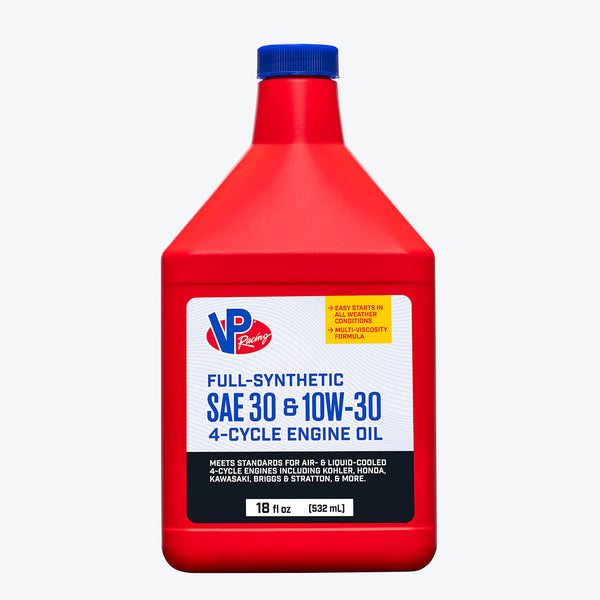
Different generator designs place different demands on the oil. Portable units used for tools, track support, or weekend activities may benefit from lighter oils that circulate quickly as conditions shift. Standby generators, which run for extended periods during outages, often require oils that maintain stability under long runtimes and elevated temperatures. VP Racing offers generator oil options designed to support both types of equipment, helping ensure strong protection no matter how your generator is used.
Viscosity measures how easily oil flows at different temperatures, and it’s a key factor to consider when selecting generator oil. The right viscosity protects components under load while preventing unnecessary strain during startup. Here’s how viscosity directly influences generator performance:
Each viscosity rating indicates how oil behaves in both cold and hot conditions. A 10W30 oil, for example, circulates well during startup and maintains a protective film once the engine reaches operating temperature. This balance is crucial for small engines that frequently operate for extended periods and experience fluctuating temperature levels.
The best generator oil isn’t simply “thicker” or “thinner.” It must match the engine’s operating environment, load, and temperature range. Oil that’s too thick can make cold starts difficult, while oil that’s too thin may break down quickly under sustained heat. For generators that run for long hours or face heavy demand, a stable viscosity is critical for maintaining proper lubrication.
Using the correct viscosity helps keep internal temperatures controlled and reduces friction-related wear. Choosing an oil outside the recommended range can lead to sludge formation, temperature spikes, and pressure imbalance, all of which shorten engine life. Whether you’re dealing with cold mornings or high-heat job sites, your generator oil should always align with manufacturer specifications and seasonal conditions.
Keeping up with scheduled oil changes is one of the most crucial steps in maximizing the lifespan of your generator and supporting consistent performance. While exact timing depends on your engine design, operating environment, and workload, a few key guidelines make it easier to know when generator oil should be replaced.
Generator oil breaks down under heat and stress, especially during long runtimes or in dusty environments. Once oil loses stability, residue begins to form, friction increases, and overall efficiency drops. This is because dirty or degraded oil can’t cool, lubricate, or protect internal parts effectively. So, replacing oil on time is a direct investment in preventing wear and avoiding costly downtime.
For new generators, the first oil change should occur early in the break-in period to remove initial metal particles and contaminants. This is why a proper break-in procedure shouldn’t be overlooked, as covered in our Break-In Oil: Why It Matters post. After a break-in period, most generators require an oil change every 50 to 100 hours of operation, depending on load and temperature. Units running in high heat, heavy dust, or continuous duty may need more frequent service.
Visual and performance cues can help indicate when generator oil needs replacement. If the oil looks dark, gritty, or smells burnt, it’s past its useful life. Many operators also change their oil before storing the generator to prevent degradation during downtime. Routine checks, especially after long runtimes, help guarantee the oil remains stable throughout each cycle.
Even the most capable generator can fall short when basic maintenance steps are missed. Generator oil should be selected and handled carefully to protect your investment in your equipment, especially during long runtimes or high heat. Here are the most common mistakes users make when working with oil for generator engines, along with how to avoid them:
Generator oil is the primary line of defense inside the engine, but it isn’t the only fluid that influences performance and reliability. Supporting fluids play important roles in heat control, cleanliness, and smooth operation. Here’s how oil for generator systems works alongside other products to help your equipment achieve peak performance:
Even the best generator oil can’t compensate for poor-quality fuel. Low-grade or improperly stored gasoline leads to carbon buildup, hard starts, and inconsistent output. Pairing top-tier oil for generator use with dependable fuel is an investment in long-term performance. For small-engine users, VP Racing’s Best Gas for Lawnmowers article goes further into how premium fuel helps prevent avoidable repairs and issues.
Some generators rely on liquid cooling systems to manage temperature during extended runtime. Using the correct coolant prevents heat spikes that may cause oil degradation. Select fuel additives, such as those formulated to reduce friction or limit ethanol-related corrosion, can further reduce stress inside the engine and help generator oil maintain stability.
While generator oil handles internal lubrication, greases are used on external fittings, linkages, and mechanical points that experience movement or vibration. Maintaining these areas reduces unnecessary strain on the engine, allowing the oil for generator protection to perform more efficiently, which can potentially extend service intervals.
It’s best not to. Different oils use unique additive packages, and mixing them can reduce stability or lead to foaming. Stick with one reliable product for consistent performance.
Synthetic oils generally resist heat breakdown more effectively and perform well in demanding environments. Still, always confirm that your generator’s manufacturer approves synthetic options.
Yes. Even sealed containers have a shelf life; typically around five years when stored in a cool, dry place. Always check the date listed on the packaging.
Some automotive oils meet the required viscosity and service classifications, but many small engines are air-cooled and need oils formulated for that environment. Follow the generator manufacturer’s specs to avoid compatibility issues.
Higher elevations can influence engine temperature and load, which may affect how oil circulates. In extreme altitude shifts, adjusting viscosity within approved ranges can help maintain proper lubrication.
Yes. Two-stroke engines often require oil that mixes with fuel. Do not use four-stroke generator oil in a two-stroke system; doing so may cause immediate damage.


