



VP Racing Fuels Official Fuel of Factory Connection Racing
San Antonio, TX (January 28, 2020) VP Racing Fuels, Inc., a leader in performance fuels, lubricants, and additives, has just...
Get FREE shipping on all non-hazmat orders of $125 +
Get FREE shipping on all non-hazmat orders of $125 +
At VP Racing, we've fueled champions and weekend riders alike for over four decades. The same commitment to performance that drives our racing fuels powers our line of stabilizers and marine solutions. We understand how fuel breaks down and what it takes to stop it, because we've been solving that problem since day one.
When fuel sits in a boat for extended periods, it starts to break down. Moisture from the air gets pulled into the tank, leading to phase separation, corrosion, and hard starts. A marine fuel stabilizer keeps your fuel chemically stable and your engine ready to run when you are.
When gasoline is exposed to air and moisture, it oxidizes and loses effectiveness. A marine fuel stabilizer prevents separation and breakdown in the tank, which is especially important for boats that go unused for weeks or months at a time. A stabilized tank means a clean burn and fewer engine issues down the line.
Corrosion in marine engines starts in the tank. Ethanol attracts water, which corrodes metal and causes residue to build up in fuel lines. A marine fuel stabilizer forms a barrier between moisture and fuel, protecting components and improving long-term reliability. Many boat owners also use a fuel stabilizer for generator to protect other essential systems during downtime.
VP Fuel Stabilizer stabilizes fuel for up to 3 years, prevents deposit-forming gums and varnishes, and uses a built-in demulsifier to pull water out of ethanol-blended fuel. This eliminates the hard starts and rough running that come with moisture contamination. Meanwhile, A-rated corrosion inhibitors protect fuel tanks, lines, injectors, and carburetors from rust and internal wear. The same conditions that threaten your boat's fuel system threaten your generator's too, so protecting both is a smart investment in making sure everything runs when you need it most.
Salt air, humidity, and long idle times take a serious toll on fuel. Marine engines demand consistent combustion under pressure, and a marine fuel stabilizer keeps the fuel system clean and functional even after long storage periods. It's a small investment that pays off in dependable starts and fewer breakdowns on the water.
Not all fuel treatments are the same. General fuel additives are designed for cleaning injectors, boosting octane, or improving burn characteristics during operation. A marine fuel stabilizer is built for something different: storage, moisture control, and corrosion protection in environments where water exposure and downtime are constant challenges.
While general additives offer benefits when the engine is running, they don't prevent ethanol-related separation or fuel degradation during long storage. A marine fuel stabilizer actively coats internal components, suspends moisture, and keeps gasoline stable over time, even in high-humidity conditions. For a deeper look at how targeted formulas work, this marine fuel stabilizer guide breaks down why purpose-built products outperform multi-use additives for boats.
If you're still weighing whether additives are worth it for your situation, our article on “Do fuel additives work? What you need to know” is worth a read. For marine engines specifically, stability and corrosion prevention are the priorities, and without a stabilizer, your fuel system stays exposed to moisture damage every time the boat sits.
Using a marine fuel stabilizer is straightforward, but doing it right makes all the difference. Here's how to get the most out of every treatment:
Before using any stabilizer, confirm it's approved for marine use and compatible with your specific engine. Most two-stroke and four-stroke marine engines are compatible, but always verify with the product label or your owner's manual.
Fuel stabilizers are concentrated, so dosing correctly ensures proper performance. Follow the label instructions based on your tank size. Overdosing won't improve results and can affect combustion. Always mix stabilizer with fresh fuel, and never estimate by eye.
Timing is everything. Add your marine fuel stabilizer while fuel is still fresh and before the boat goes into storage. Run the engine for a few minutes to circulate the treated fuel through the entire system, coating the tank, lines, and injectors with protection that holds for weeks or months until you're ready to get back on the water.
Choosing the right marine fuel stabilizer means choosing products built for the real demands of life on the water. VP Racing offers solutions designed to protect, perform, and keep you moving, whether you're heading out for the weekend or buttoning up for the season.
Even the best marine fuel stabilizer can't do its job if storage conditions work against it. These best practices help extend fuel life and reduce engine risk during downtime:
UV exposure and heat accelerate fuel breakdown. Store your boat in a shaded area or indoor facility whenever possible. High temperatures can reduce the effectiveness of a marine fuel stabilizer even when it's been applied correctly. Keeping the tank cool supports long-term stability.
Air in the tank leads to condensation, which brings moisture into contact with fuel. Top off your tank before storage to reduce airspace and prevent water from accumulating. Tightly sealed fuel caps and well-maintained vents make a real difference here.
Add your marine fuel stabilizer while the fuel is still fresh, then run the engine briefly to circulate it through the system. This locks in protection before storage begins. Boat owners who maintain additional fuel-powered equipment, like chainsaws or generators, can apply the same approach using a product like chainsaw gas mix to keep smaller engines protected during the off-season, too.
Marine fuel stabilizer isn't just for boats. Many of the same issues that affect marine engines also show up in small equipment like trimmers, mowers, and backup pumps. Ethanol absorbs moisture in any environment, and when fuel sits idle, it degrades regardless of engine size.
Using a marine fuel stabilizer in your small engines helps prevent phase separation, corrosion, and hard starts. For mowers that sit all winter, a dedicated fuel stabilizer for lawn mower is the difference between a smooth first pull in spring and a weekend wasted on troubleshooting. VP Fuel Stabilizer protects fuel for up to 3 years, prevents deposit-forming gums and varnishes, removes water from ethanol-blended fuel via a built-in demulsifier, and guards fuel tanks, lines, injectors, and carburetors from rust and corrosion. It’s the same protection your boat gets, working just as hard in your storage shed.
For two-stroke equipment like blowers and saws, getting the fuel right is just as important as protecting it. The wrong 2-cycle fuel mix can throw off engine performance and shorten equipment life. But VP's full-synthetic 2-cycle oil is JASO FD-certified, works in all 2-stroke air-cooled engines, and includes advanced fuel stabilizers that keep the mix protected for up to 12 months. This translates into easier starts, low smoke, and the right ratio every time.
If you're managing fuel across multiple machines, the same standard that protects your boat should protect everything else in your fleet.
Keeping your boat in peak condition isn't just about maintenance schedules. It's about making smart decisions every time you fuel up. A marine fuel stabilizer is one of the simplest ways to protect your engine from ethanol damage, corrosion, and performance loss over time.
VP Racing is the #1 race fuel brand trusted by professionals and amateurs alike, and that same standard runs through every marine product we make. Whether you're preparing for storage or heading out for a weekend on the water, VP Racing gives your equipment the protection and consistency it deserves from the first start of the season to the last run of the year.
While stabilizers don't directly boost fuel economy, they prevent degradation that reduces engine efficiency. Keeping fuel fresh supports consistent combustion, which helps maintain throttle response and mileage over time.
Yes, and for boats that aren't used daily, it's often recommended. Continuous protection from moisture and ethanol separation keeps your system clean and ready regardless of the season.
No. Marine fuel stabilizer preserves the original quality of your fuel without altering its octane or combustion characteristics.
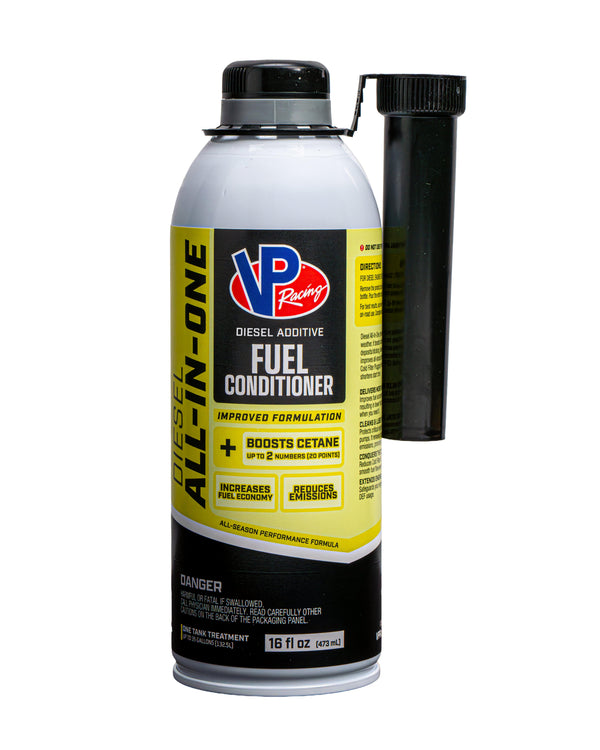
Most marine fuel stabilizers are formulated for gasoline. For diesel marine engines, VP Diesel All-In-One™ is purpose-built for diesel applications and delivers complete fuel system protection.
Using too much stabilizer isn't harmful in most cases, but it can lead to incomplete combustion or mild carbon buildup. Always follow the recommended ratios on the label for best results.
It significantly reduces the need to drain fuel before storage, but for very long-term or uncertain storage periods, draining may still be advisable. Stabilizer extends fuel life; it doesn't stop time.


