



VP Racing Fuels, combustible oficial de Factory Connection Racing
San Antonio, TX (28 de enero de 2020) VP Racing Fuels, Inc., líder en combustibles, lubricantes y aditivos de alto...
Envío GRATIS en todos los pedidos de $125+ sin peligros
Envío GRATIS en todos los pedidos de $125+ sin peligros
Carrito
Su carrito actualmente está vacío.
Seguir comprando
Gastos de envío y descuentos calculado al momento de pagar
Heavy loads, heat, and repeated gear contact can place serious demands on drivetrain components. Choosing the right 80W90 gear oil helps support dependable lubrication and gives hardworking gear systems the protection they need during operation.
Choosing the right gear oil is a smart, practical investment in your drivetrain’s performance and the long-term life of your machine. VP Racing delivers a dependable, high-performance option engineered to keep your gears operating smoothly under heavy loads and punishing conditions, whether you're out on the open road or pushing limits on the track.
When the pressure is on, maintaining a stable lubricant film between loaded gear surfaces is everything. It stops direct, destructive metal-to-metal contact right in its tracks, protecting your most critical components from friction, heat, and premature wear. By choosing an oil engineered for demanding real-world use, you get the absolute peace of mind that your drivetrain is fully protected and ready to perform every time you turn the key.
The correct service classification matters when selecting lubricant for a transmission or gear system. Always check the manufacturer’s requirements before choosing an oil, as GL-4 and GL-5 have different performance requirements.
Our guide to GL-4 vs GL-5 gear oil explains the distinction and helps clarify application needs, as choosing the correct formulation supports component protection. Additive chemistry can influence wear protection and material compatibility in heavily loaded gear systems.
Older vehicles may have transmission and differential requirements that make careful lubricant selection especially important. Checking manufacturer specifications helps identify the appropriate viscosity and service classification.
Proper compatibility also matters when protecting established driveline designs. Some older transmission and differential designs use component materials whose compatibility with lubricant additive chemistry deserves careful consideration.
VP Racing helps owners choose oils suited to their drivetrain requirements. Using the right oil is a worthwhile investment in component protection and dependable performance.
Start with your vehicle manufacturer’s requirements, then compare the specified viscosity, service classification, and intended application before selecting the appropriate VP Racing lubricant.
GL classifications address different performance requirements, making the specified classification an important purchasing factor. Always match the lubricant to the requirements listed for your drivetrain.
Transmission lubrication requirements can vary by application. Explore our manual transmission fluid options when your vehicle requires dedicated transmission lubrication. Viscosity influences lubricant film formation and flow behavior across changing temperatures and operating loads.
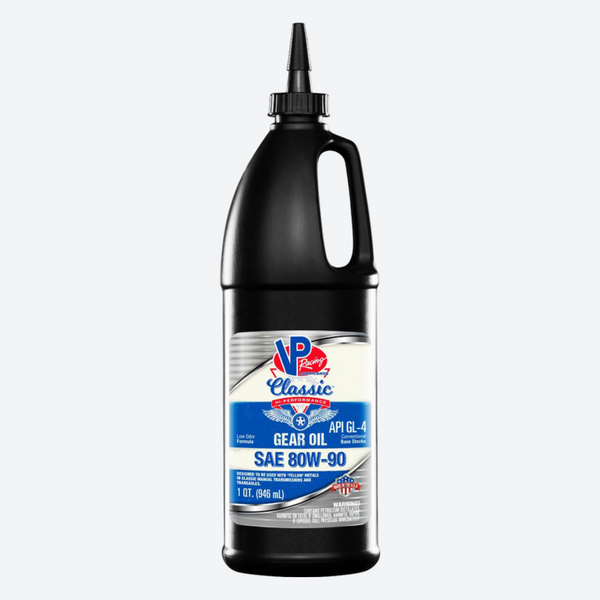
VP Racing offers two 80W90 options for distinct drivetrain requirements. Check the manufacturer’s specification before choosing your oil.
Choose the specification your drivetrain requires and make the right oil a practical investment in protection and performance.
Protecting your drivetrain starts with a gear oil that is built to match your vehicle’s exact specifications and demanding workload. Upgrading your lubricant is the easiest investment you can make to prevent premature wear, secure smooth shifts, and guarantee lasting performance.
VP Racing brings decades of track-proven passion and expert engineering straight to your garage. Choose the gear oil designed for your specific drivetrain requirements to ensure your machine stays sharp, reliable, and ready to perform whenever duty calls. Because at the end of the day, Our Passion Is Your Performance®.
80W90 describes the oil’s SAE viscosity grade. The first number relates to lower-temperature viscosity characteristics, while 90 identifies its viscosity range at higher operating temperatures.
Follow the service interval specified by the vehicle or equipment manufacturer. Operating conditions, mileage, contamination, heavy loading, and lubricant condition can affect when a change is appropriate.
Yes, improper storage can affect lubricant quality over time. Keep unopened oil properly sealed and stored according to product recommendations, away from contamination, moisture, and extreme conditions.
Mixing products is not automatically advisable simply because they share a viscosity grade. Differences in formulations and specifications matter, so check compatibility and manufacturer requirements before mixing lubricants.
Color can vary by product formulation and is not a reliable measure of performance by itself. Evaluate the lubricant according to its specifications, condition, service history, and manufacturer guidance.
Some gear lubricants have a distinctive odor because of components used in their additive packages. Odor alone does not determine whether an oil is suitable for a particular application.


