



VP Racing Fuels, combustible oficial de Factory Connection Racing
San Antonio, TX (28 de enero de 2020) VP Racing Fuels, Inc., líder en combustibles, lubricantes y aditivos de alto...
Envío GRATIS en todos los pedidos de $125+ sin peligros
Envío GRATIS en todos los pedidos de $125+ sin peligros
Carrito
Su carrito actualmente está vacío.
Seguir comprando
Gastos de envío y descuentos calculado al momento de pagar
As diesel fuel gets colder, naturally occurring wax can form crystals that restrict fuel flow and clog filters. That can mean difficult starts, interrupted operations, and costly downtime for drivers and equipment operators. Using diesel anti-gel before temperatures fall helps manage wax formation and keeps fuel moving through the system.
Diesel anti-gel is a fuel additive that helps prevent wax crystals from restricting fuel flow in freezing temperatures. As diesel cools, naturally occurring paraffin wax begins to crystallize, potentially clogging fuel filters and limiting fuel delivery to the engine. This can cause difficult starts, poor performance, and unexpected downtime. Using a quality anti-gel treatment before temperatures drop helps manage wax crystal formation and supports reliable diesel operation. For drivers and equipment operators, preventive treatment is an important part of protecting fuel system performance throughout winter.
Anti-gel additives help maintain diesel fuel flow by modifying how wax crystals develop as temperatures fall. Understanding these changes explains why preventive treatment matters:
Cold-flow improvers interact with forming paraffin crystals, changing their size and shape to reduce clustering. This helps fuel pass through filters more easily during freezing conditions.
As temperatures fall, wax crystals can accumulate and restrict fuel filters, reducing fuel delivery to the engine. Effective treatment helps limit these restrictions before they disrupt operation.
If you're wondering how diesel anti-gel works and when you should use it, the best time to add treatment is before freezing temperatures arrive. Diesel fuel can begin forming wax crystals as temperatures approach its cloud point, which varies by fuel composition. Choosing the right diesel fuel treatment before a cold snap helps reduce the risk of restricted fuel flow and filter plugging. Follow the product's recommended dosage and temperature guidelines for effective winter protection.
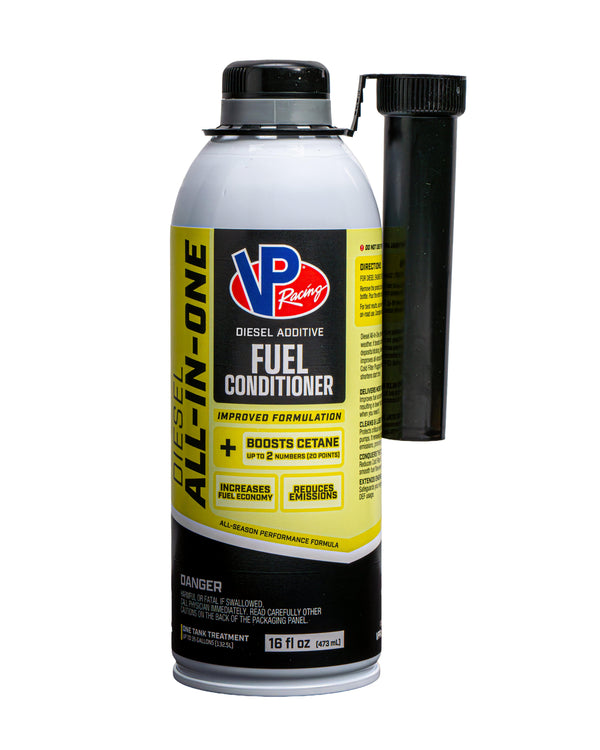
Choosing a diesel additive with verified cold-weather benefits helps protect fuel flow before freezing conditions affect performance. Understanding how diesel injector cleaner works also helps distinguish injector maintenance from protection against fuel gelling. VP Racing offers a practical option for both needs.
This year-round treatment combines cold-flow protection with injector cleaning and added lubricity, making it a practical choice for diesel owners preparing for winter.
Protecting diesel fuel during winter requires early treatment and proper storage practices. Following these preventive steps helps maintain fuel flow and reduce cold-weather disruptions:
Add anti-gel treatment before fuel reaches its cloud point, when wax crystals begin forming. Additive effectiveness depends on fuel composition, temperature, and proper mixing during application.
Keep storage tanks clean and minimize water contamination that can freeze and restrict fuel flow. The article VP introduces tank guardian diesel contamination prevention system explains additional contamination prevention measures for diesel storage.
Cold-weather diesel performance starts with choosing the right fuel treatment before temperatures drop. VP Racing offers Diesel All-In-One Diesel Fuel Additive & Conditioner to help prevent fuel gelling, reduce filter plugging, and support reliable winter operation. Its cold-flow protection and fuel system benefits make it a practical addition to seasonal diesel maintenance. Explore VP Racing's diesel treatment solutions and prepare your truck or equipment for freezing conditions before the next cold snap arrives.
No. Most anti-gel additives are designed to prevent wax-related fuel restrictions rather than reverse severe gelling. If fuel has already gelled, a specialized emergency treatment and controlled warming may be necessary.
Yes. Adding more than the recommended amount may not improve cold-weather protection and can affect additive performance. Always follow the manufacturer's dosage instructions for the specific fuel volume.
Some anti-gel products are compatible with biodiesel blends, but effectiveness varies depending on blend percentage and formulation. Check the product label for compatibility before treating biodiesel-containing fuel.
Properly formulated additives used according to manufacturer instructions should not damage compatible diesel injection systems. Choose products suitable for your engine and avoid mixing treatments without checking compatibility.
Not always. Winter-grade diesel is formulated for improved low-temperature performance, but additional treatment may be beneficial in unusually severe conditions. Check the fuel's cold-flow specifications before adding an additive.
Not necessarily. Anti-gel additives primarily address wax crystallization, while water contamination requires separate management. Some multifunctional treatments offer additional moisture-related benefits, depending on their formulation.


